


Root Canal Is for What? The Dental Issue This Procedure Solves
You are not alone in cases where you have typed the following words in Google: root canal is for what. The majority of the population is aware of the fact that it is a dental procedure… but are they fully aware of the reason why one would need a dental procedure? The thing is that a root canal is not a procedure that dentists prescribe to check exactly at this moment; it is a procedure aimed at preventing pain, eliminating infection and saving your natural tooth.
I would like to divide it into plain terms to make you realize what a root canal is all about, when it has to be performed, and what it means to recover.
What is a Root Canal All About?
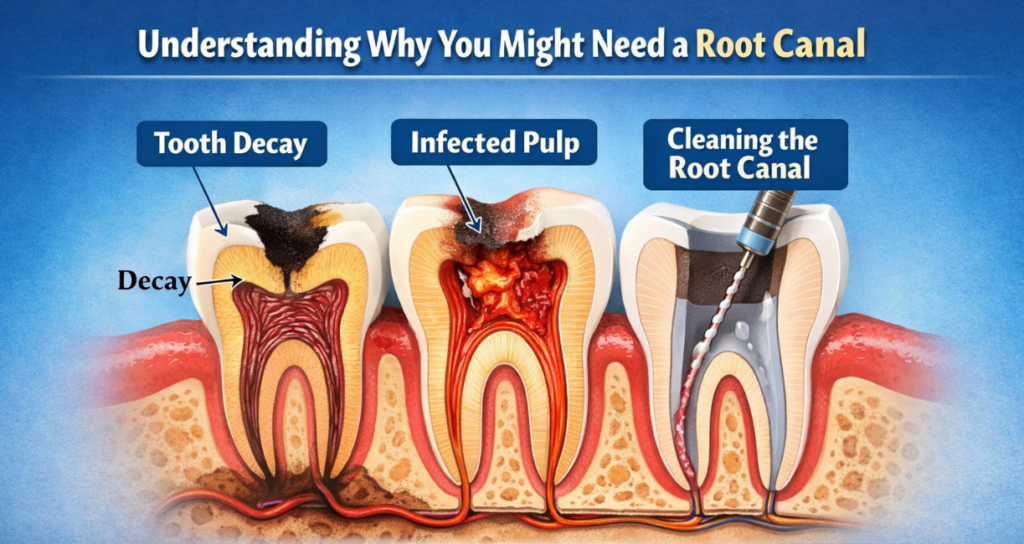
If the inside of your tooth becomes infected or severely inflamed, a root canal is performed. Overall, within each tooth is a soft tissue known as the pulp that is composed of nerves and blood vessels. Once bacteria enter this inner part (as typically happens due to extensive decay, a fissure, injury, or recurring root treatment procedures), infection may occur in the pulp.
This infection does not remain in place.
It can:
- Causes severe tooth pain.
- Causes swelling of the face or gums.
- Form an abscess (pus pocket) of the teeth.
- Diffuse infection to the nearby tissues.
Root canal treatment involves the extraction of the infected pulp, the cleaning and disinfection of the inner part of the tooth and covering it. Subsequently, it is again restored in the form of a crown that is normally functional.
In very simple language, a root canal is to prevent an infection and save the tooth that would have to be pulled otherwise. Early root canal treatment can help avert the development of pain, a dangerous complication in dentistry.
Symptoms of Possible Need for a Root Canal:
A significant proportion of the patients take too long thinking that the pain will disappear. Incidentally, infected pulp does not recover. The following are some of the red flags:
Persistent Tooth Pain:
The persistent pain, in particular, the one that does not recede under the pressure, particularly during chewing, is a huge red flag.
Sensitivity to Hot or Cold:
When the pain continues to persist in your tooth when taking coffee or ice cream, it is possible that the nerve located within the tooth may be damaged.
Swollen or Tender Gums:
An example of this is swelling around a given tooth, indicating that the infection has spread past the root.
Darkening of the Tooth:
The thickness of a tooth that becomes grey or dark might have internal damage or deteriorating pulp tissue.
Pimple on the Gums:
This may be an indication of abscess draining infection.
You need to watch out for these symptoms because they probably imply that you will require a root canal treatment to cleanse the tooth and alleviate pain until it develops into a more severe dental problem.
Why Not Just Pull the Tooth?
This is one of the most frequently asked questions by dentists.
It might appear that extraction can be a solution, but retaining your natural tooth could prove to be almost always preferable. Here’s why:
- Natural teeth assist in the proper upholding of bite alignment.
- Loss of teeth may cause loss of bone.
- To replace a tooth with an implant or bridge is normally more cost-ineffective and time-consuming.
- Artificial teeth are not as comfortable as natural teeth.
Root canal helps to retain your original tooth structure that is healthy in the long-term perspective.
Is a Root Canal Painful?
It is against the fear of a great deal here. Ironically, root canals are not painful; they alleviate pain.
Dental methods and anaesthesia that have been developed today render the process like a filling. According to most patients, the worst part was the pain they experienced long before the treatment and not during it.
When you have severe pain in your teeth, swelling, or infection, maybe it is time to consider the effects of a Dental Emergency in Palm Bay to prevent the aggravation of the problem.
The Process of the Procedure?
It is not as hard as it may seem, once one knows how.
- Numbing the Area – Local anesthesia Identity verified that you become comfortable.
- Eradication of the Infection – The dentist puts a small opening and scrapes the infected pulp.
- Cleaning and Shaping -The root canals are disinfected and shaped.
- Filling the Canals -Passive weight, a biocompatible substance, closes the gap.
- Restoring the Tooth – A crown is another thing that can be done to the tooth to make it stronger and more secure.
Once this is done, the tooth is able to act normally once again. Finding an advanced provider of your root canal treatment helps guarantee success and comfort in the long term.
Root Canal Recovery Period: Expectations
Root canal recovery time is among the main issues that patients are concerned with. The positive thing is that recovery is normally fast and bearable.
Immediate After Effects:
In a number of days, you can experience slight pain or tenderness. This is normal and may, in most cases, be treated with over-the-counter painkillers.
Eating After a Root Canal:
Do not chew the treated tooth until the last time you have a restoration to your tooth (such as a crown). First of all, stick to softer foods.
Oral Hygiene:
Brush and floss normally; do not be so rough about the treated part.
Full Healing:
The majority of the discomfort disappears in 3-5 days. The adjacent tissues still keep healing in the following two weeks.
In case the pain increases rather than decreases, call your dentist immediately.
What is the Defaulter Effect of Treatment?
A root canal may cause severe complications, so one should not disregard its necessity:
- Severe, spreading infection
- Jawbone damage
- Facial swelling
- Tooth loss
- Health risks in the whole body in case bacteria penetrate the bloodstream.
What may be justifiable as a toothache may rapidly become a real dental emergency. Early root canal treatment is also much easier, less painful, and much more affordable than when it is already too late to save the tooth.
The Infection Prevention and Treatment Success of Root Canals.
Root Canals are very successful. Given good treatment and an appropriate crown, even a decayed tooth will last many years – even a lifetime.
The key is:
1. Good oral hygiene
2. Regular dental checkups
3. Early intervention toward new symptoms.
After completing a root canal, dentists often recommend placing a dental crown to protect the treated tooth from damage and restore its strength. You can read our detailed guide on dental crown types and cost to understand the best options available.
